The Home as Common Ground
by Gabriella Okoobo
When we think about a third place many might think of the cafe, a sports club, the bar, community centres – places where strangers and regulars can come together. As the commodification of social life intensifies, many of these places have become increasingly inaccessible in physical and intangible ways. In the last few months, I’ve noticed this has become a recurring topic of discussion in my own circle. How do we continue to find places of retreat without exceeding our financial limits? And more importantly, how do we create access to spaces of retreat, pleasure and community for people who are marginalised and othered, have limited financial means, no home or limited private space?
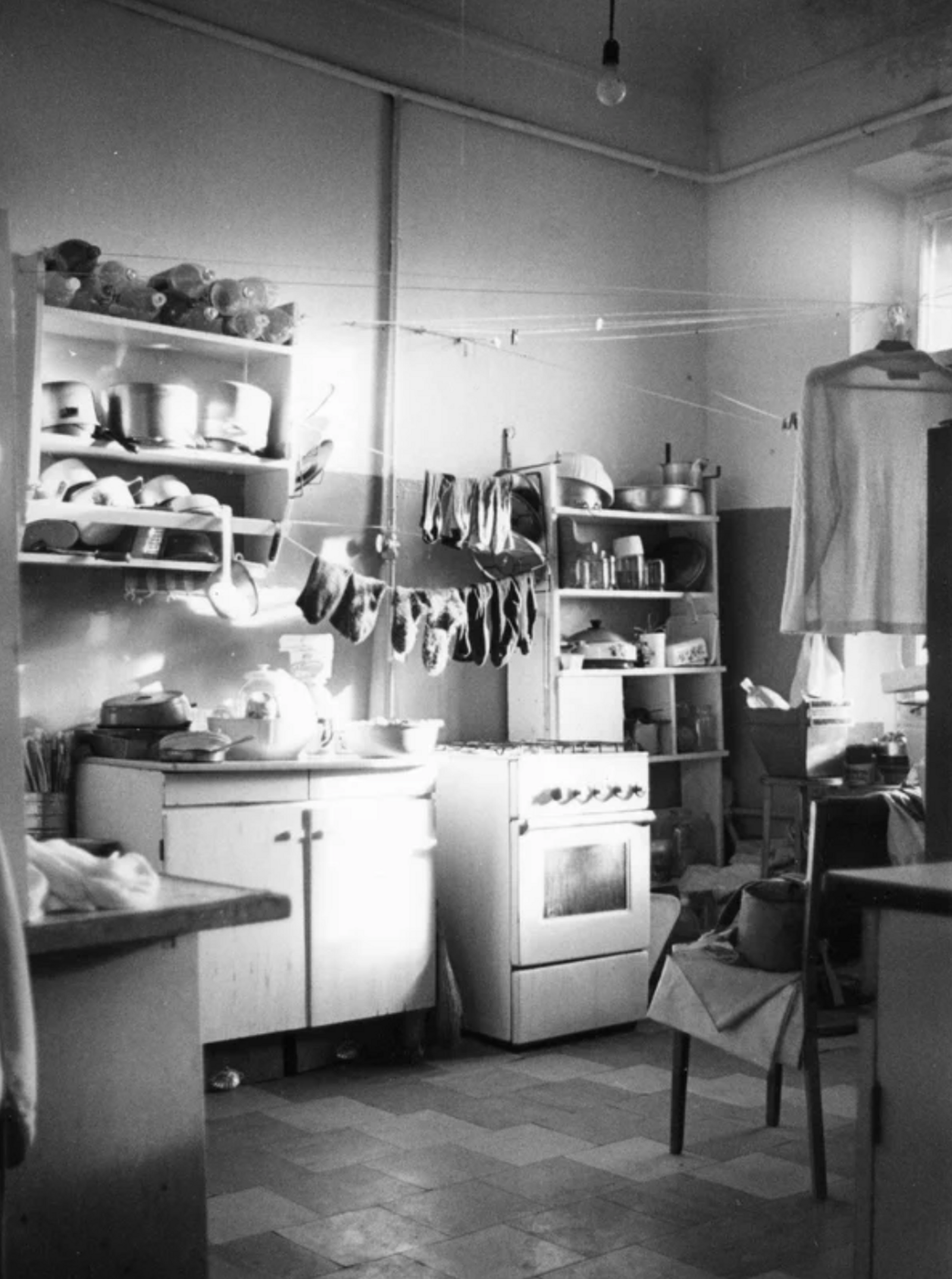
Laundry drying in a communal kitchen in Moscow. (Courtesy of European University, St. Petersburg, Russia, Colgate University and Cornell University.)
Ray Oldenburg, who coined the term ‘third place’, was clear: the home is a first place, the workplace a second, and the third place is the informal ground where social life happens. But Oldenburg's model assumes that these spaces are open and accessible to all. While a third place is supposedly a place of cultural and ideological exchange between strangers, for marginalised, non-conformist and othered bodies, a different reality exists. The dominant public sphere can be hostile, exclusionary or simply unsafe. In addition, when third places become financially inaccessible too, the question of where to gather can become existential. The question is not only how to keep communal life affordable, but how to create spaces where safety, identity and belonging are not subject to the conditions of those who guard the door or host the space. Could the space we live in hold the solution to this problem? Might the home itself act as a third place, and how has it done so in the past?
Where Oldenburg's model ties the third place to a specific location outside the home, Homi K. Bhabha's concept of the Third Space offers something more fluid. For Bhabha, the third space is not a physical destination but a liminal, in-between zone where cultural identities are negotiated, translated and reconstructed. It is where communities produce new forms of belonging that cannot be contained by dominant cultural categories. Importantly, this process is not tied to a particular architecture. It can emerge wherever the conditions for that collective negotiation exist. This understanding makes it possible to read the home not simply as a private interior but as a site where diasporic, Black, queer and feminist communities throughout history have negotiated identity, forged political solidarities and rehearsed alternative ways of living together.
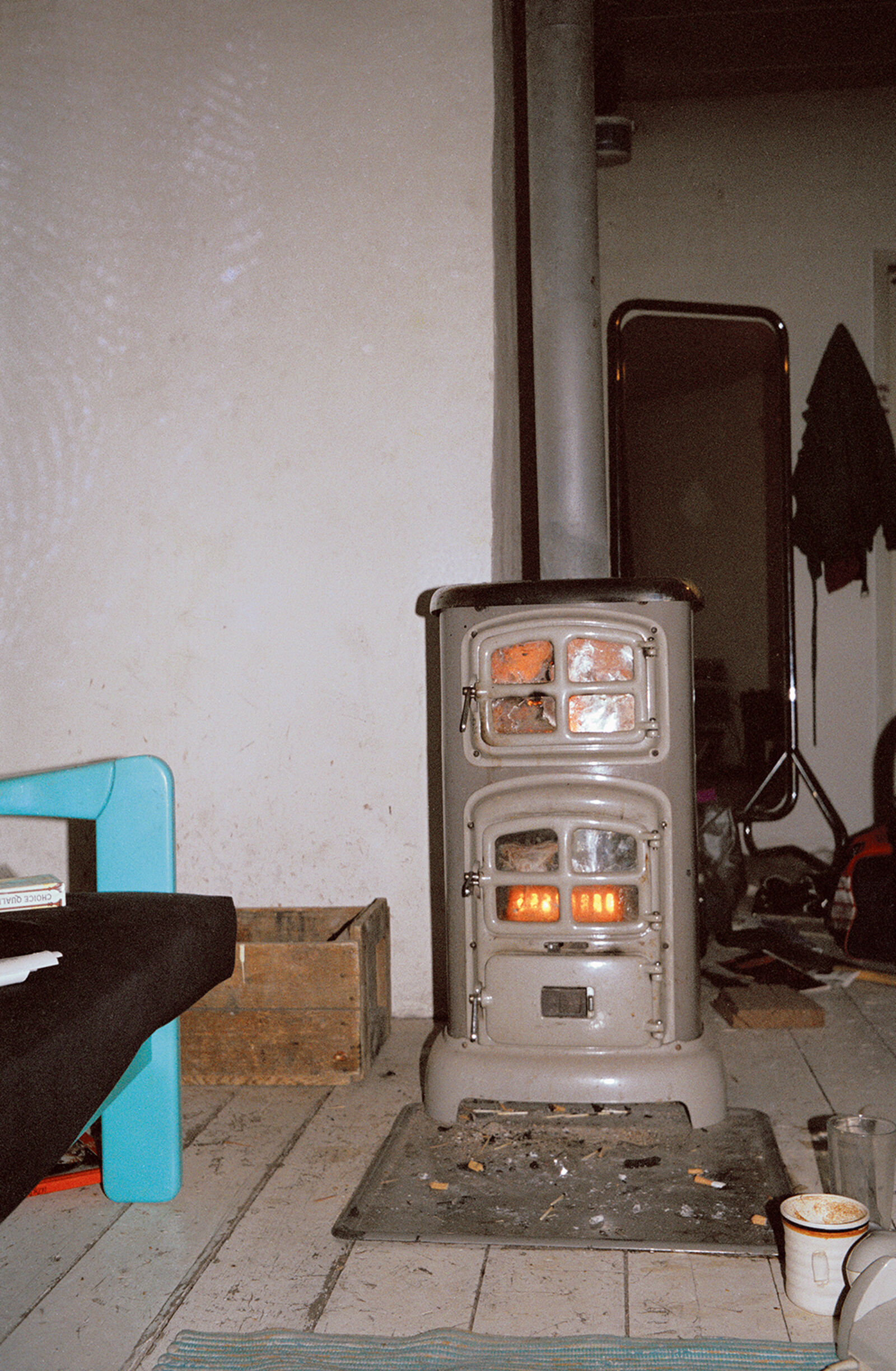
observatie contra observatie, Pieter Paul Pothoven, 2020, in collaboration with activists associated with Revolutionaire Anti-Racistische Actie (RARA), part of the group exhibition Every Act of Struggle: Intrusion and Assembly, 2025, de Appel

observatie contra observatie, Pieter Paul Pothoven, 2020, in collaboration with activists associated with Revolutionaire Anti-Racistische Actie (RARA), part of the group exhibition Every Act of Struggle: Intrusion and Assembly, 2025, de Appel
Historically, domestic space has repeatedly exceeded its role as a private sphere. The salon, living room and kitchen are all spaces that have functioned as sites where hospitality becomes a political practice and where the boundary between intimacy and public life is temporarily suspended. By repurposing the home, marginalised groups constructed a protective, yet deeply transformative third space: consciousness-raising groups meeting in living rooms through the second wave feminist movement — a movement whose living-room politics largely served white, middle-class women (Fraser, 1990). This prompted Black, working-class and queer women to build their own separate spaces of gathering (Norman, 2006; Hooks, 2015) — queer chosen families turning apartments into sites of care and resistance during the AIDS crisis of the 1980s and 90s (Gutterman et al, 2024). In addition it also aligns with bell hooks’ concept of the 'homeplace' as a site of resistance (2015), a framework vividly mirrored by mid-century radical groups like the Black Panther Party, who intentionally collectivized residential apartments into communal 'Panther Pads' to serve as both political sanctuaries and underground community hubs away from state surveillance (Bloom, Martin, 2013). The home became a temporary commons for gathering: a place where communal experiences transformed into collective knowledge, political solidarity and alternative ways of connecting and finding meaning. Yet this activation of the home was never only political. It was also about rest, joy, pleasure and the quiet maintenance of collective life.
A specific example that comes to mind is Ans Sarianamual house in Arnhem (Agnietenstraat 283), which served as a meeting place for Black women. Late 1983 marked the start of the first Black Women's Helpline, which Sarianamual ran with an editorial team from her living room. During the consultation hours, women could call in with their issues regarding discrimination and racism. Consequently, the Umoja Zwarte Vrouwenkrant (Umoja Black Women's Newspaper) was launched the next year. Around that time, Sarianamual's living room increasingly began to function as a safe meeting place where women from the region could connect with one another and feel understood. (Umoja Zwarte Vrouwenkrant, 2024)
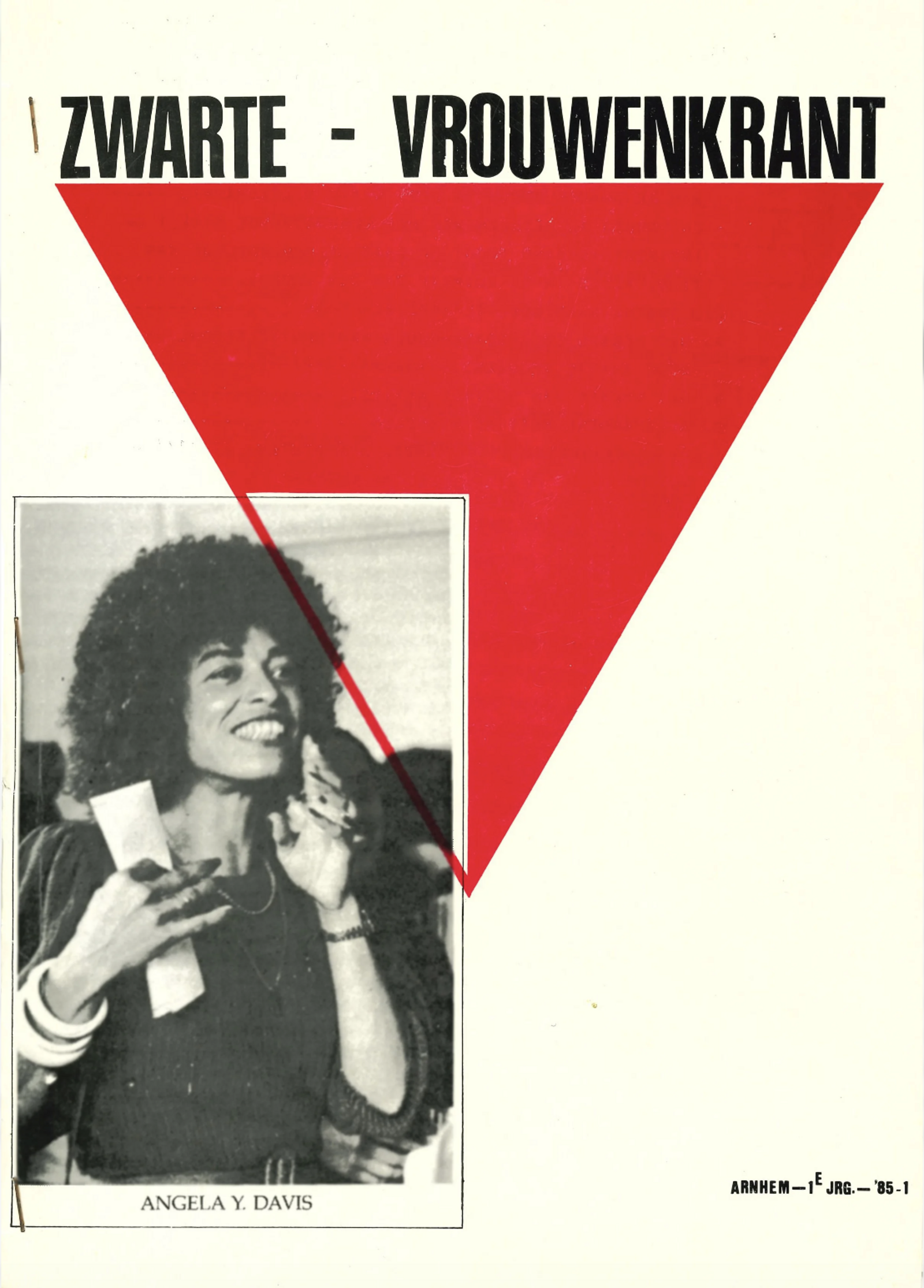
First edition of Umoja Zwarte Vrouwenkrant, 1985, published by Stichting ‘Zwarte Vrouwen & Racisme’, Arnhem.
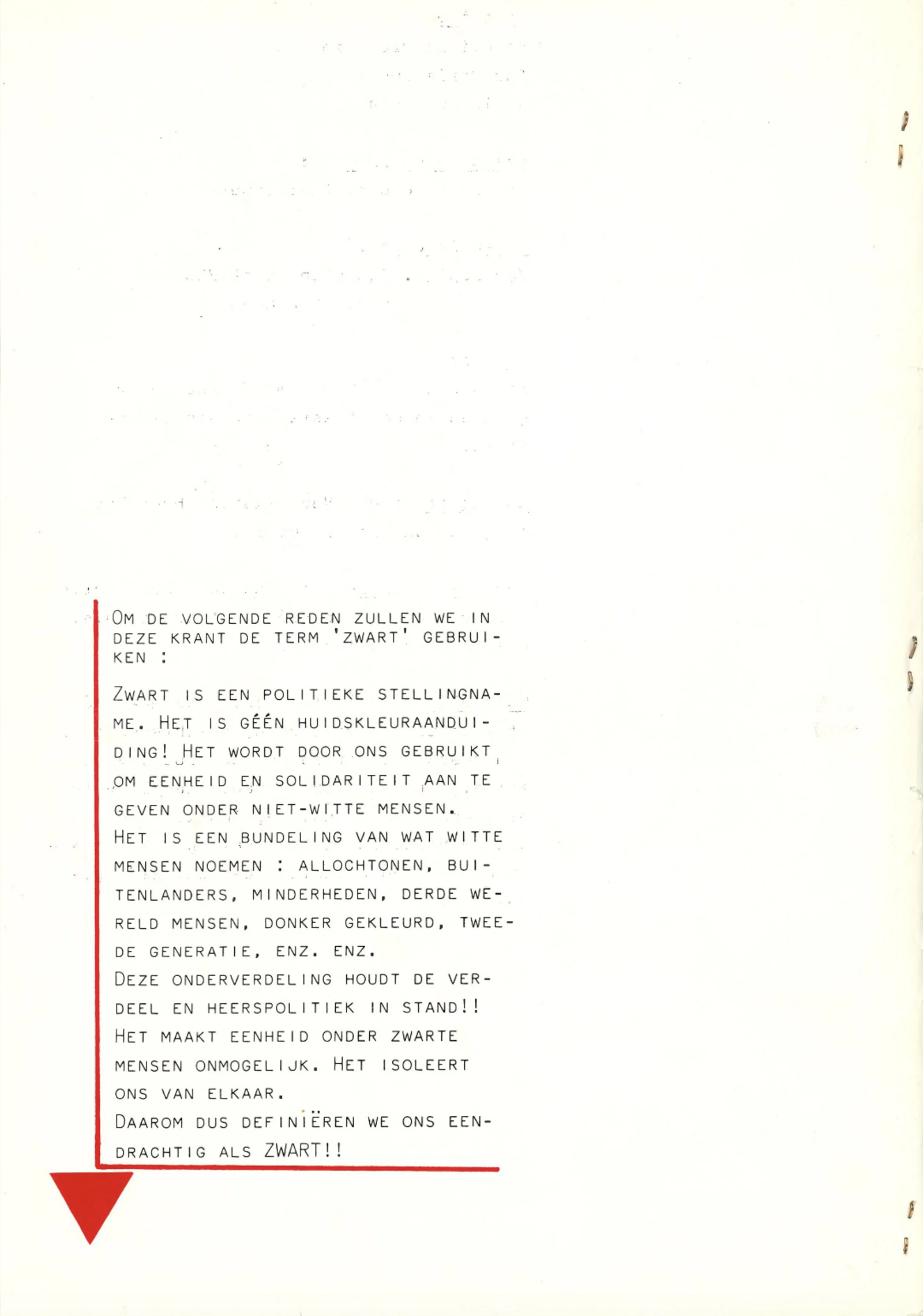
First edition of Umoja Zwarte Vrouwenkrant, 1985, published by Stichting ‘Zwarte Vrouwen & Racisme’, Arnhem.
The living room of Sarianamual enacted what Derrida (2000) might call an attempt at unconditional or absolute hospitality. A space where women arrived not as strangers to be assessed, but as those who already belonged, without having to negotiate the terms of their welcome. Hospitality as we ordinarily know it is always conditional: the host controls the threshold, sets the terms and retains the power to include or exclude. Within this type of hospitality, the possibility of hostility and exclusion are always present. For communities excluded from the dominant public sphere, the home offers a way to become the host and rewrite those conditions entirely.
As children of migrants, many of us grew up watching our parents build community not in cafes or bars, but in each other's homes. Friends, relatives and friends of friends gathered there because those public spaces often felt alien, too distant from the particular kind of gathering they needed. In the last few decades, I watched my parents help build something more deliberate: the Esan Community in the Netherlands, an organisation created to support people from the Esan tribe of Nigeria. Meeting bi-weekly, it was a space to discuss matters concerning the community, but also simply to be together. When financial cuts forced them to stop renting a space, meetings began rotating between the homes of members. The doors were always open: friends of friends would join, newly arrived Nigerians and undocumented migrants seeking support and guidance. The kitchen was central to how this community held itself together. Food was never secondary. People took turns cooking, bringing dishes to share. As La Cocina noted during their presentation at de Appel's Transpositions (2018), kitchens are places where major ideological, economic and social transformations are experienced in the most intimate manner. I saw this in my parents' community and I recognise it in the potlucks my friends and I have been organising.
While many of these domestic commons emerged through practices of care and mutual support, the home has also functioned as an infrastructure for clandestine political organisation, as illustrated by Pieter Paul Pothoven's Facade Suspended (2018), which was part of de Appel’s research project and exhibition Every Act of Struggle: Intrusion and Assembly in 2025. The installation reproduces the facade of a former squatted house associated with the clandestine activist group Revolutionary Anti-Racist Action (RaRa). Rather than a place of hospitality, the domestic interior became an infrastructure for political organisation, shielded from public visibility. Pothoven's decision to reproduce only the facade draws attention to the threshold itself: an ordinary domestic exterior concealed an interior where the boundaries between private life and political action had dissolved. The work reminds us that the home has long functioned not only as a site of care and community, but also as a space where alternative political worlds could be imagined, organised and sustained beyond the gaze of the state.
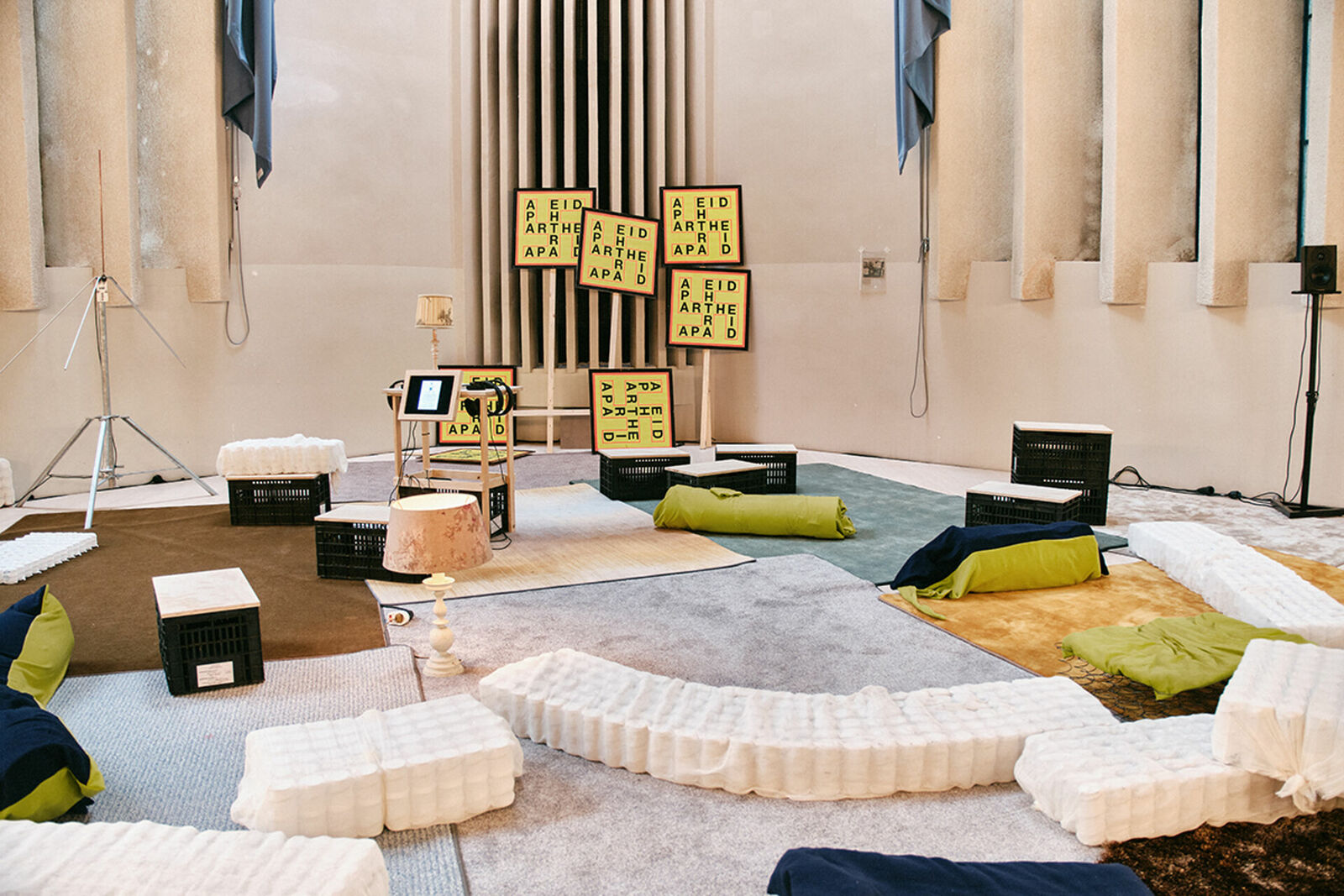
Documentation of group show Every Act of Struggle: Intrusion and Assembly, 2025, de Appel
Photo: Nikola Lamburov
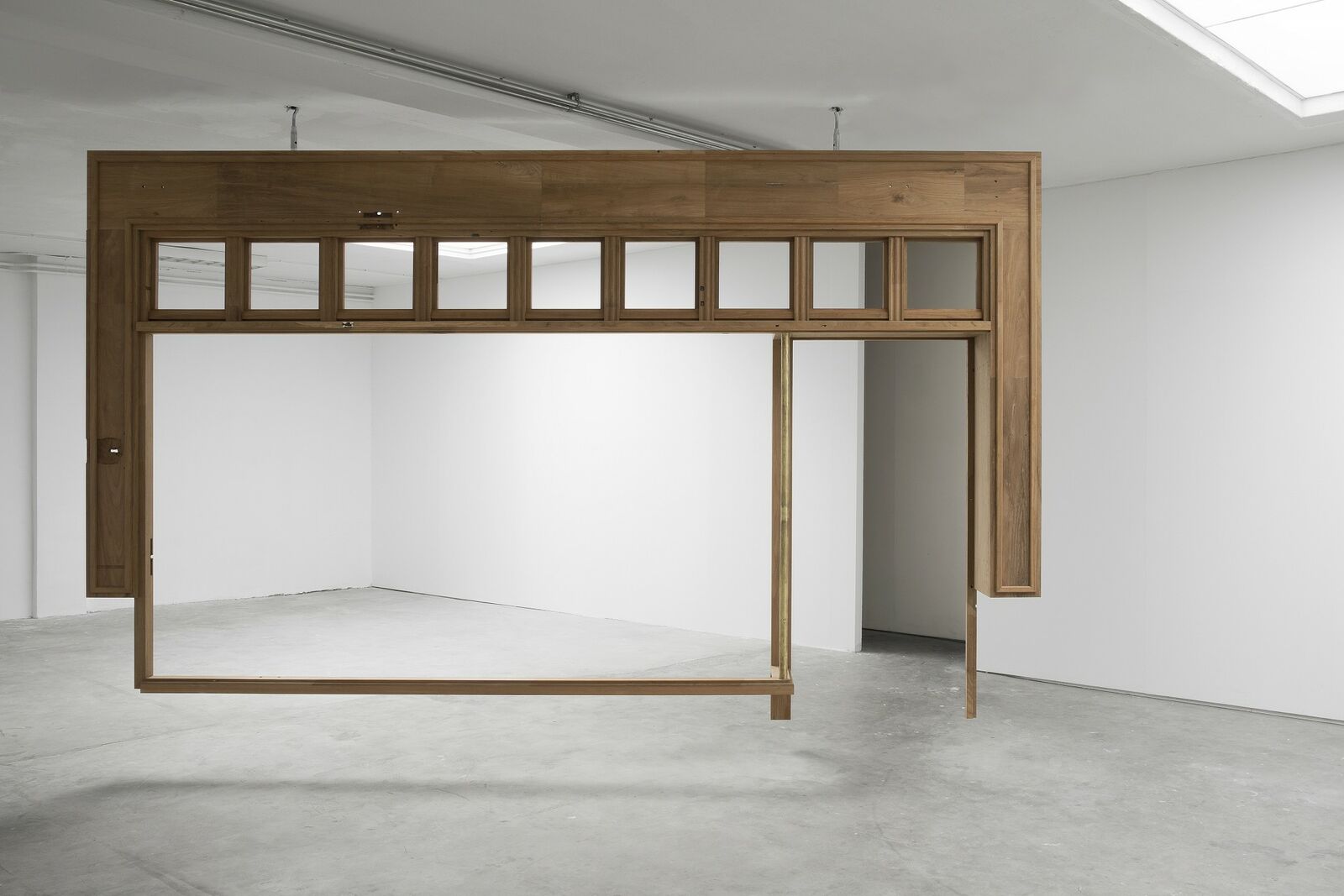
Pieter Paul Pothoven, facade suspended, Dürst Britt & Mayhew, 2018, The Hague
So what does it take for a home to become a third place? Perhaps less than we think. Many of us are already blurring the lines quietly in everyday ways. As the cost of living rises, getting our money's worth at home has taken on a new meaning. As some people put it:
“I paid my rent so don't ask me to come out. I'm at home getting my money's worth.”
But what if that also meant opening your door to others – not just literally but through many different forms of care, community and resistance. For those on the margins, the home is also a site of political activation. What begins as a gathering for rest, for joy and for the simple relief of being among people who understand you, can slowly become something more. For those who have never been able to be fully themselves in normative public spaces, the intimacy of the home creates the conditions for a different kind of exchange. One that is more honest, more vulnerable and less guarded. Within these walls, people can speak from their actual experience rather than translating it for an audience that may not understand or accept it. And it is precisely this quality of exchange (unfiltered, collective, grounded in shared experience) that can transform a gathering into an act of organising. Voices that have been isolated find each other. And in doing so, they find that this type of exchange becomes a connection. Together they can begin to imagine and create the kind of spaces they need. All of this is possible if someone is willing to open their door.
References
○ The Location of Culture - Homi K. Bhabha
○ Republishing: Umoja Zwarte Vrouwenkrant – Tamara Hartman, Ans Sarianamual, Mirelle van Tulder, Tabea Nixdorff, Archival Textures. (2024)
○ Transpositions – de Appel (2018)
○ A Matter of (In)digestion – La Cocina (2018)
○ The Great Good Place - Ray Oldenburg (1989)
○ Every Act of Struggle: Intrusion and Assembly – de Appel (2025)
○ Facade Suspended - Pieter Paul Pothoven's (2018)
○ How to Queer the Domestic – Lauren Jae Gutterman, Martin F. Manalansan IV, Stephen Vider (2024)
○ Homeplace - Bell Hooks (2015)
○ Black Against Empire - Joshua Bloom en Waldo Martin (2013)