How to Build a House Without Bricks: Conversation with damdam
by Ilia Pellapaisiotou and Jan-Pieter ‘t Hart
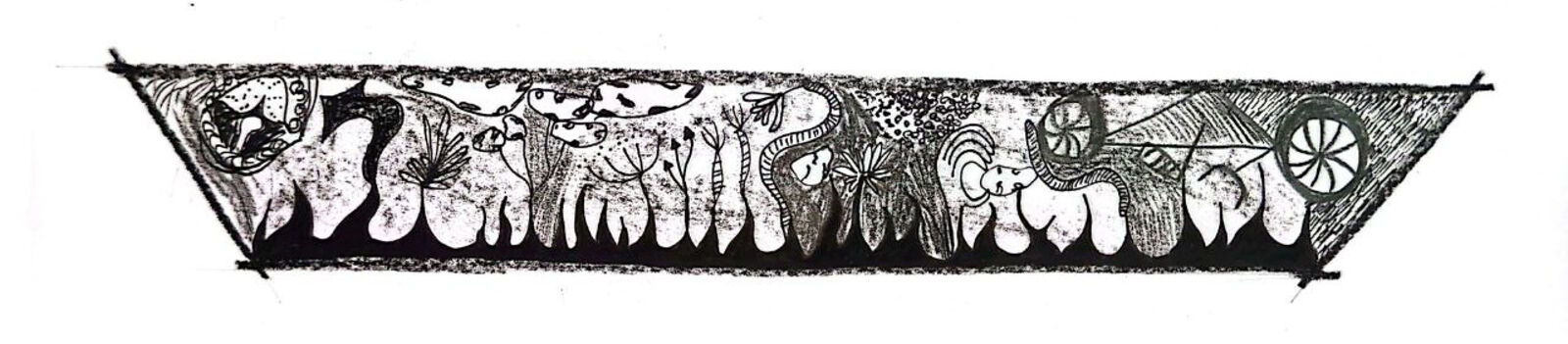
Illustration by damdam for Building a House without Bricks, 2026, de Appel
The exhibition Building a House Without Bricks, on view at de Appel between 3 July and 14 August 2026, emerged from a two-year parallel trajectory of the de Appel Curatorial Programme, Sandberg Institute’s temporary masters programme Lumbung Practice, and the educational knowledge-sharing platform Gudskul in Jakarta. The exhibition was curated by the constellation of people and collectives brought together by these programmes: the ‘collective of collectives’ damdam. Through the exhibition and the public programmes around it, damdam sought to cultivate and explore tools for collective organisation in times of crisis.
The exhibition came into being through a back and forth between representatives of the various collectives within damdam in Amsterdam and members of the collectives situated around the globe. The latter sent instructions for the construction of various objects, at first to exhibit at de Appel, and afterwards to travel to the other collectives in their different localities. These objects are, in varying degrees, utilitarian; they are of use in the day-to-day practices of the collectives. This method was the result of discussions around how art institutions can relate to DIY collective organising, and how institutional resources can be transvested to local communities. To learn more, de Appel’s Ilia Pellapaisiotou and Jan-Pieter ‘t Hart interviewed various members of the extensive damdam collective.
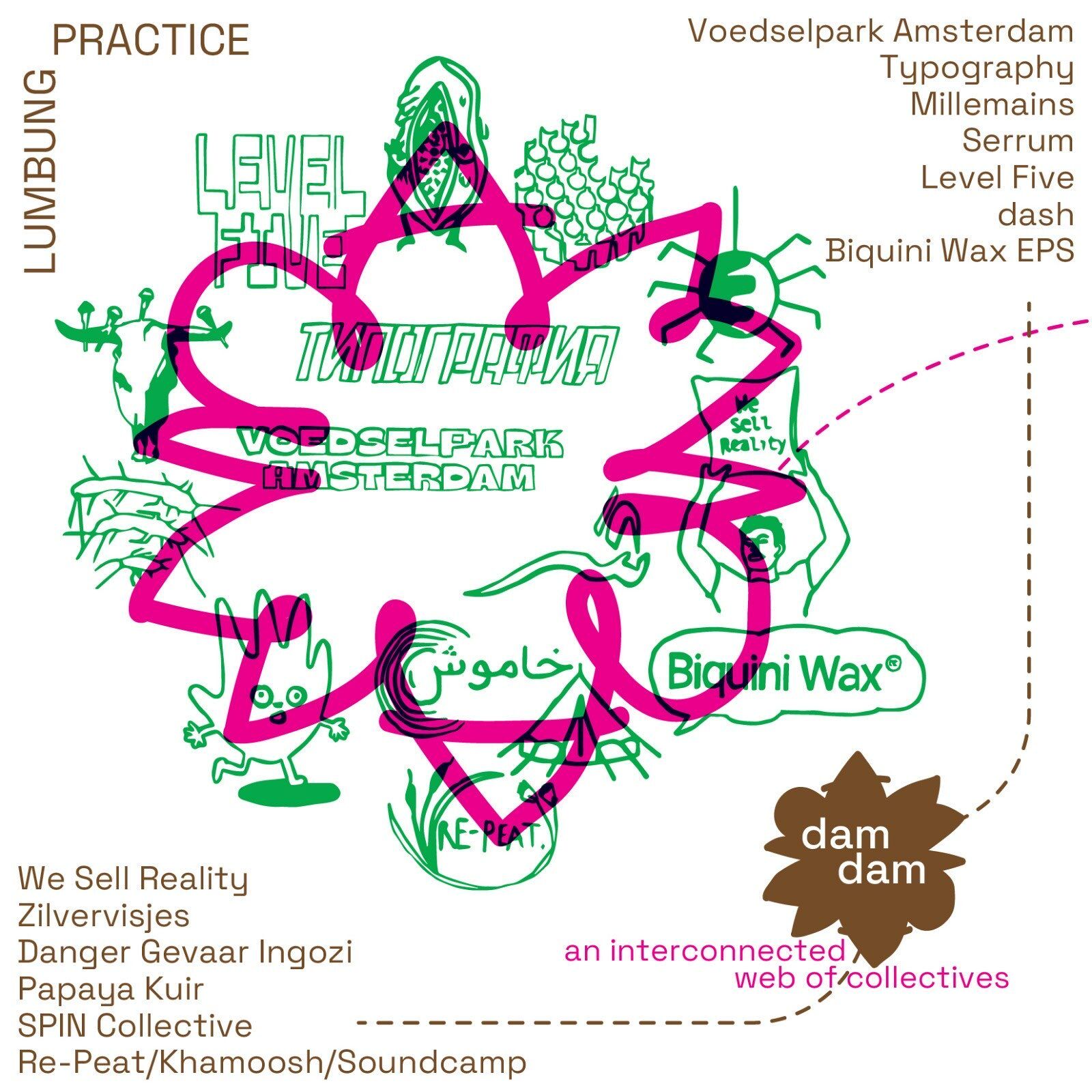
Map of the collectives of that comprise damdam, 2026
Can you tell us a bit more about the overall idea, why you decided to structure the exhibition like a house? What does the idea of the house represent to you? Especially a ‘house without bricks’, like the title?
Gerardo Contreras (Biquini Wax EPS): First of all, the platforms in the exhibition are made from recycled walls taken from a previous exhibition. In that sense, we literally tore down one house to build another, even if only as a gesture.
Many international art programmes implicitly depend on the question of how artists, migrants, students, and refugees live when they gather in cities like Amsterdam, yet these living conditions often remain invisible. We wanted the exhibition to address those material conditions directly, asking what a house actually represents for people whose collective practices are inseparable from their everyday lives.
After spending a year together, we realised that domestic spaces are often where collective work actually happens. Whether it is a residency, an exhibition space or a farming project, there is almost always a living room, a kitchen or a garden where decisions are made and relationships are maintained. It may sound obvious, but the reproduction of life is still inseparable from collective practice.
For us, presenting the exhibition as a house became the most honest way to hold the experiences, tensions and contradictions of damdam as a collective of collectives. The house is less a metaphor than the material condition that allows collective life to exist.
Can you elaborate on the process of the instructions and making the objects? What made you decide on this method?
Gerardo Contreras (Biquini Wax EPS): The furniture in this house does not simply represent collective processes; it is the direct materialisation of collective decision-making, resource distribution and harvesting.
As explained in the exhibition booklet, each collective decided how to use the production budget allocated to their contribution. They developed instructions for what should be built, and collectively we assembled those elements into the different rooms of the house. The result is intentionally unfinished. It is almost an inhabitable house, but not quite. That incompleteness was a conscious decision.
Many of the participants had to leave before the exhibition opened because of visa restrictions, summer schedules or financial limitations. This led us to ask ourselves: how can we build a space for lumbung practice and collective gathering when the people who constitute that community are absent? In that sense, the exhibition is not only a house without bricks. It is also a house without people.
We spent many assemblies discussing this paradox. Building a house without bricks became a way of rethinking the materiality of collective art under conditions of absence, housing precarity and restricted mobility. It reflects the contradictions of trying to build community.
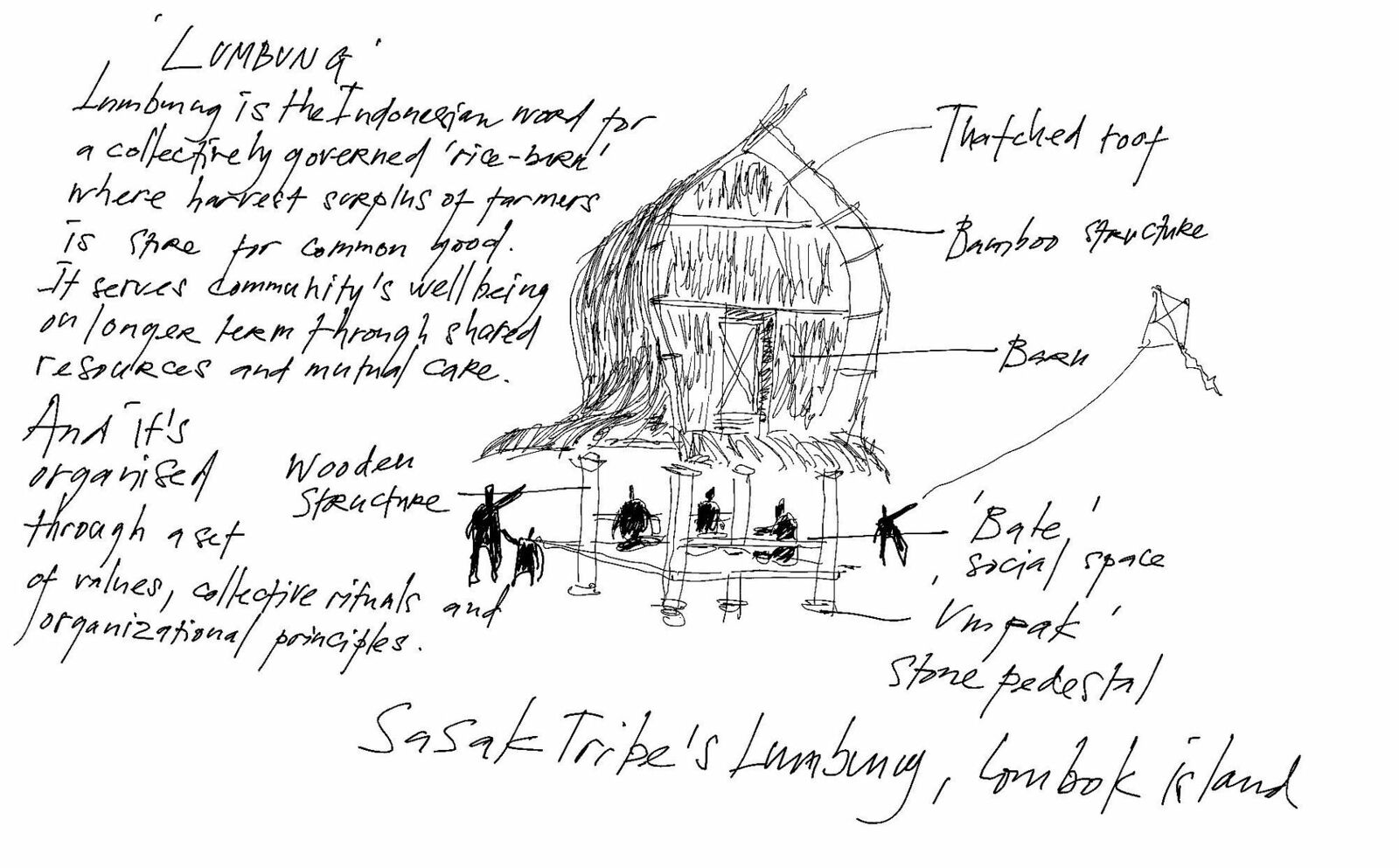
Drawing by Iswanto Hartono (ruangrupa)
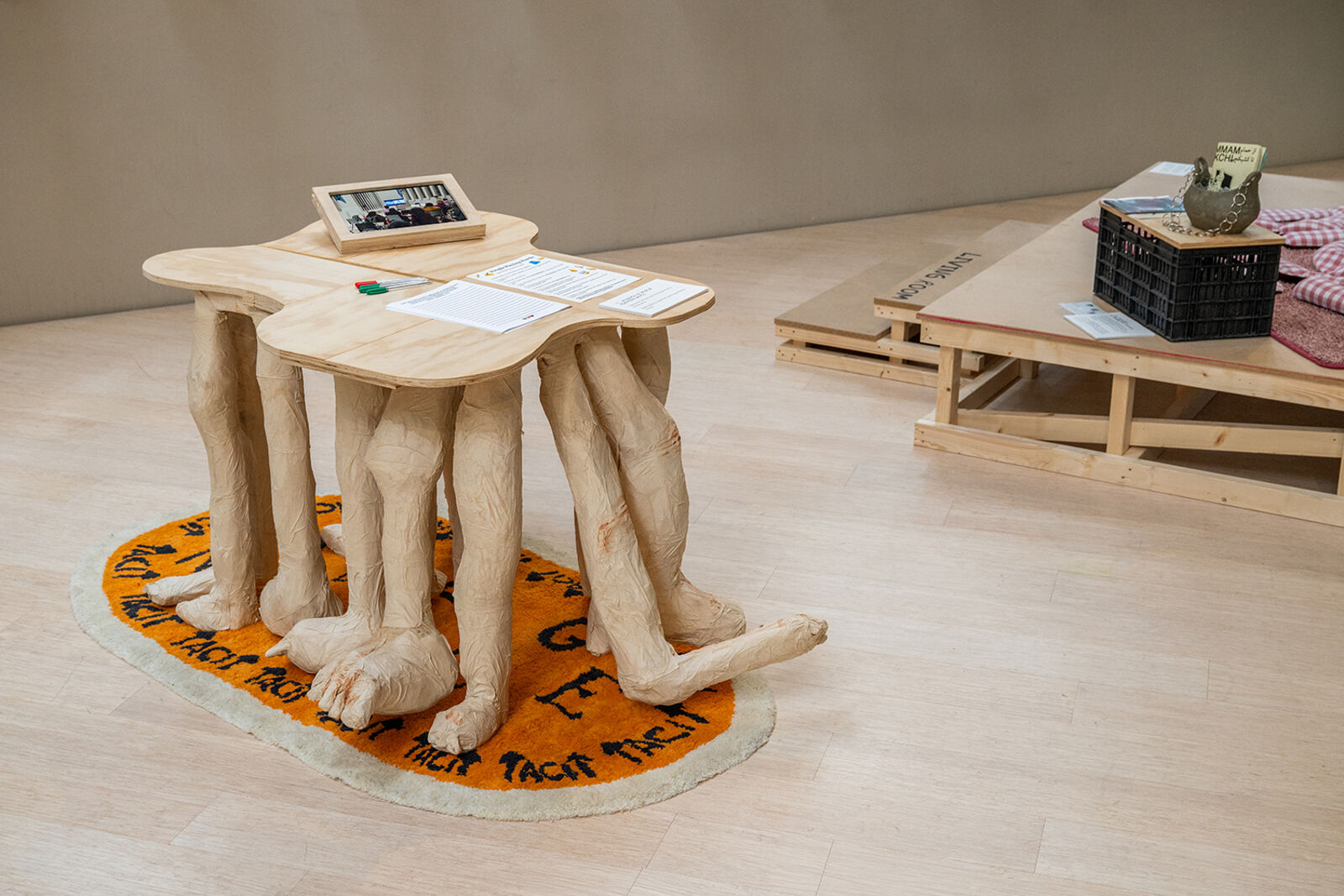
Documentation of the exhibition Building a House without Bricks, 2026, de Appel. Photo: Sander van Wettum
Can you tell us a bit more on how you activated de Appel’s front garden into a solidarity garden?
Natascha Hagenbeek (Voedselpark Amsterdam): I have started reviving the front garden. Voedselpark planted several food forest species, but the soil needs further regeneration before it can support a wider range of edible plants. My intention is to gradually transform it into a community-driven solidarity garden. Once the garden is in a more stable condition, I would like to involve neighbours and local food-related organisations. I already have contacts in the area and plan to reach out to them, as well as make the project more visible locally to encourage participation. One practical way of building a community around the garden is by organising regular open gardening days, where neighbours can join in, work together and take shared responsibility for the space. I have organised similar initiatives before and know that these kinds of recurring activities help create a sense of ownership and continuity.
I know that creating a garden takes time. At the same time, I think of these as ‘just-do-it’ projects: by setting an intention and taking concrete first steps, you create the conditions for a community to grow around them. Sometimes the project itself becomes the catalyst for the relationships and structures it needs to sustain itself.
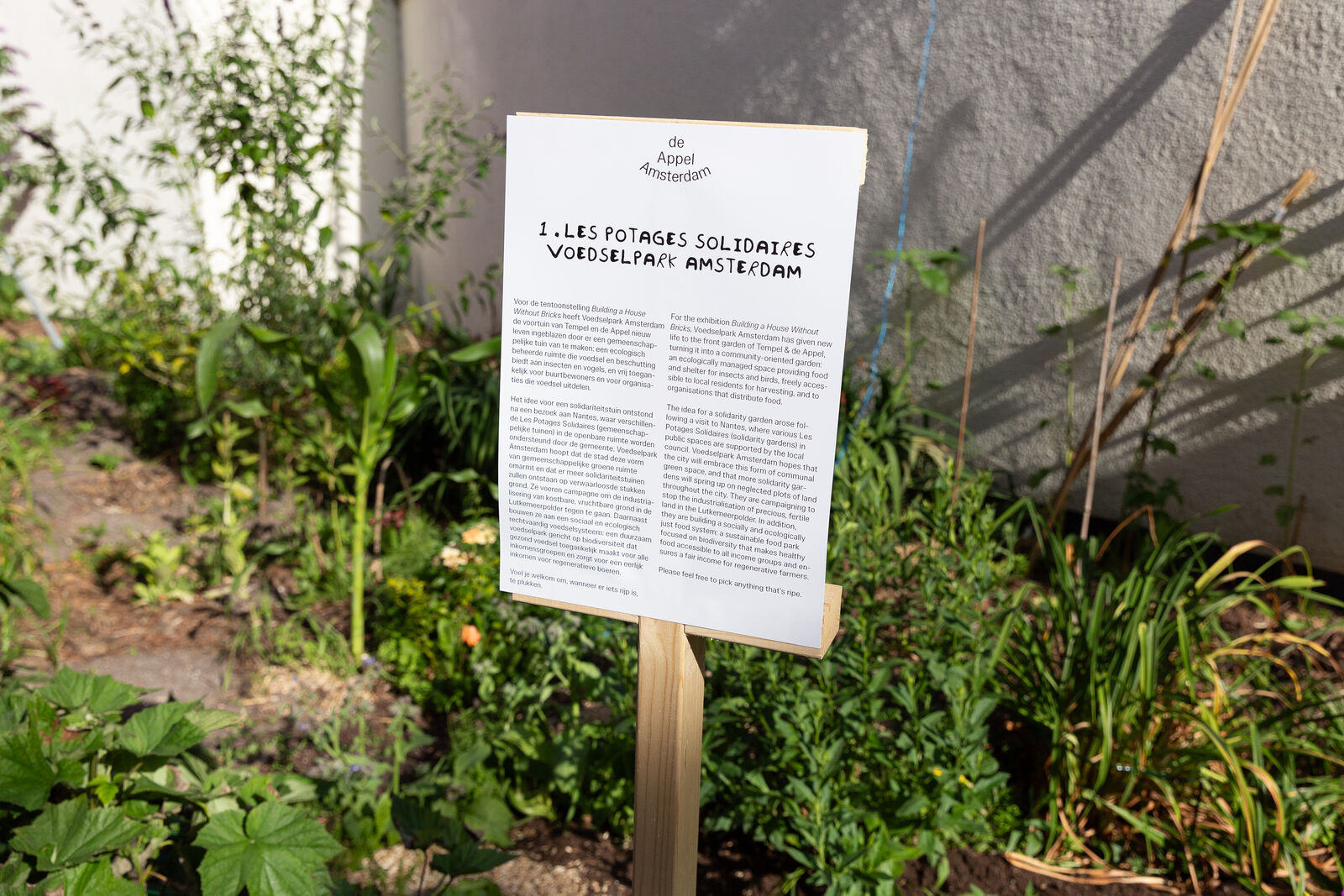
Documentation of the front garden by Voedselpark Amsterdam, as part of the exhibition Building a House without Bricks, 2026, de Appel. Photo: Sophia Jiaqi Xu
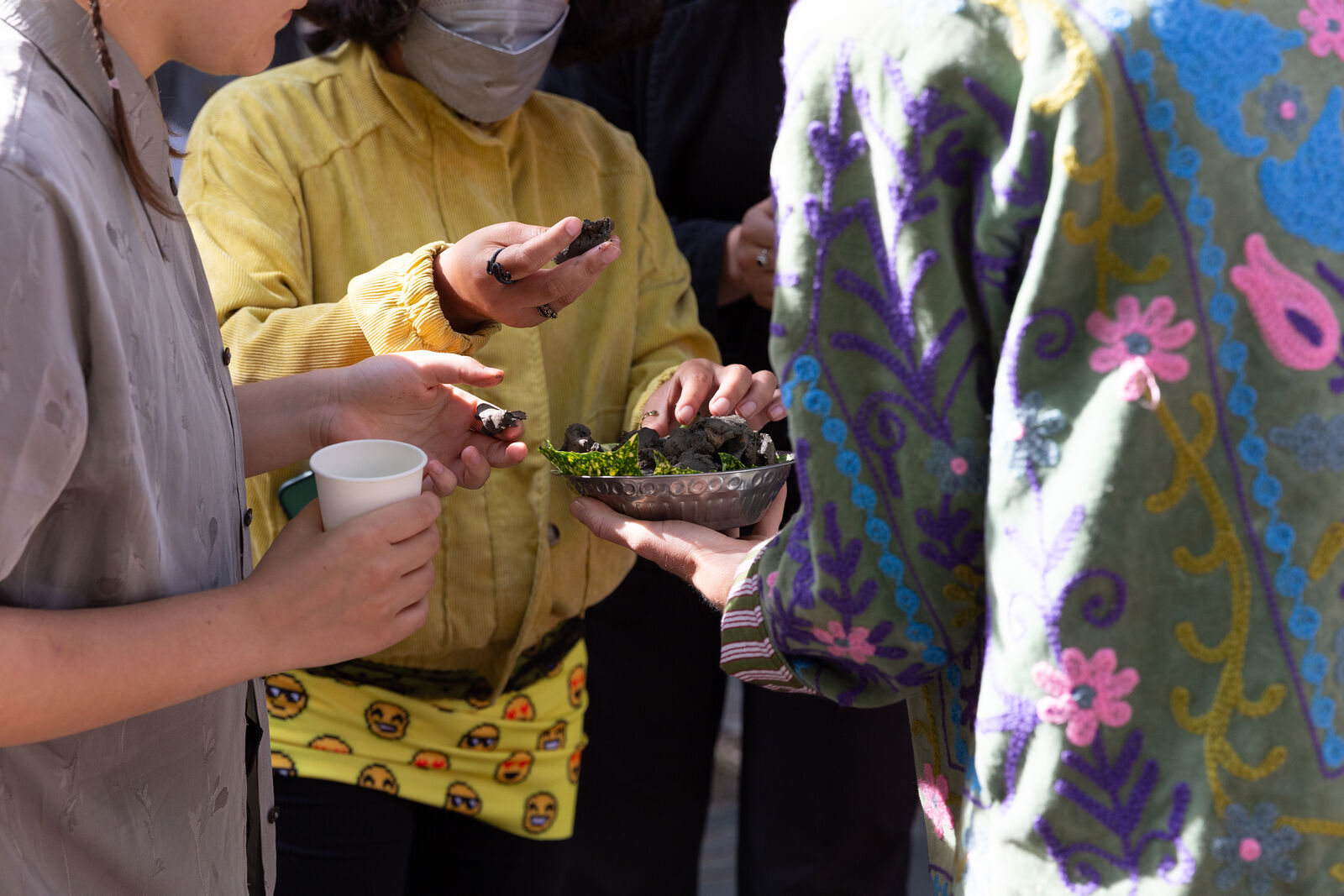
Documentation of the opening event of the group exhibition Building a House without Bricks, 2026, de Appel. Photo: Sophia Jiaqi Xu
Many of the works seem less concerned with producing objects than with maintaining conditions for collective life. Do you see maintenance as an artistic practice, a political practice, or something else entirely?
Marianna Kruchinski (Typography): I do not think all of us understand art as something that belongs in the exhibition space. That can also be frustrating, because much of the art that inspires me personally is material, crafted and deeply informed by knowledge of technologies and forms of making.
But this exhibition unfolded differently. A large part of our work happened through the process of developing the instructions together. By the time they were finished, we had limited time and limited human resources to produce works. At the same time, the maintenance of our own collectives and the urgencies in our local contexts felt more important than producing objects for this particular moment. So, for us, this exhibition is a way of practicing relationships and taking responsibility for the conditions that allow collective life to exist.
Many of our works begin not by turning a new idea into an object, but by noticing what already exists and asking what it needs to continue. That might mean caring for a neglected garden, maintaining community infrastructure such as a collective space, a radio station or creating opportunities for people to meet and collaborate over time. I think maintenance is political, because it shifts attention away from novelty and toward continuity. It recognises that sustaining relationships of different kinds is just as important as inventing something new. At the same time, for us it is also an artistic method. We try to prefigure alternative ways of living together, to create small situations in which they can already be practiced. The artwork is not only what is shown in the exhibition, but also the social and material conditions that make those forms of collective life possible.
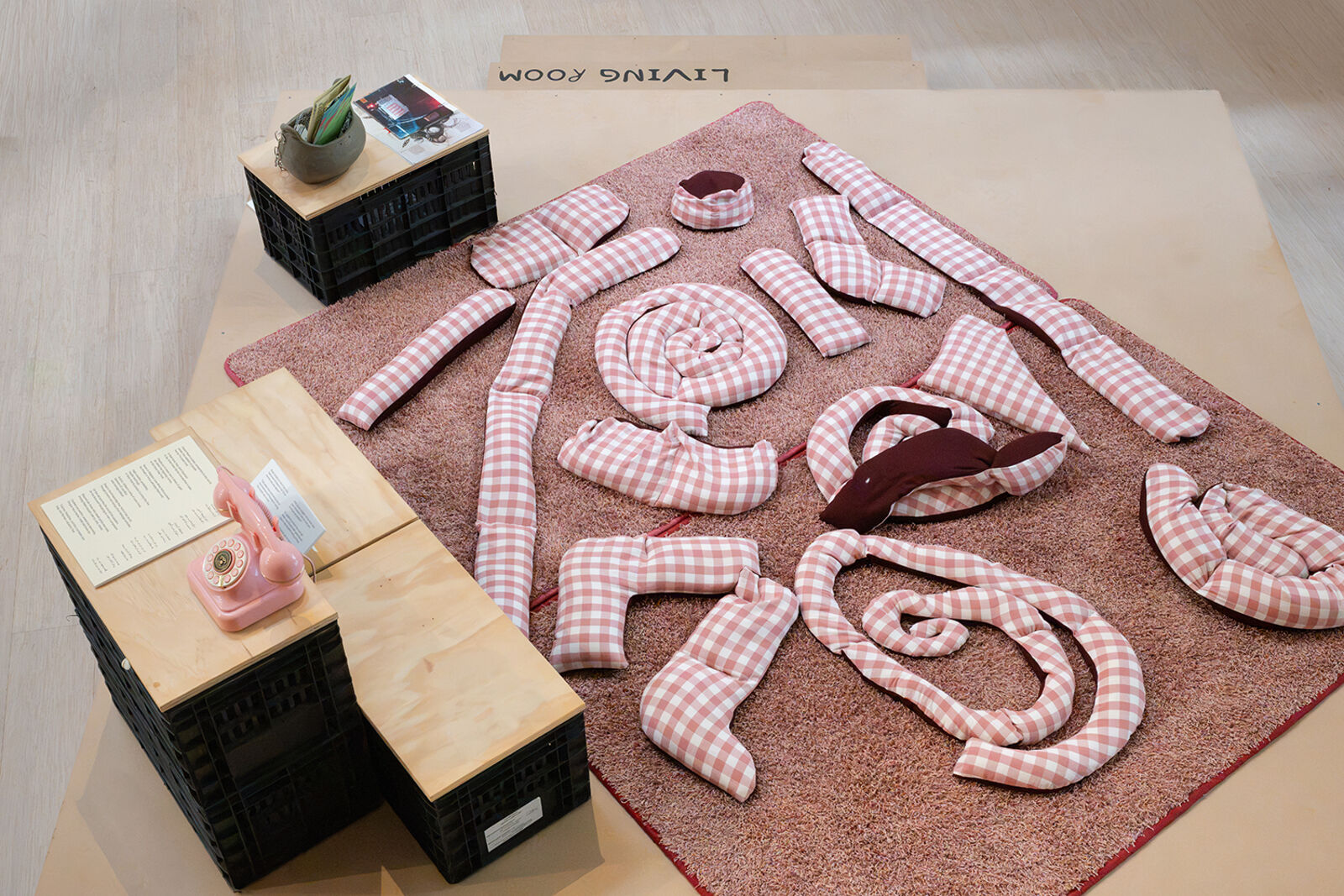
Documentation of the exhibition Building a House without Bricks, 2026, de Appel. Photo: Sander van Wettum
I want to touch upon the digital platform, which you have described as another room in the house. Drawing a parallel also with third spaces, I’m interested in hearing your thoughts on the digital platform as a potential third space?
Emili Allahbeigi (dash): Regarding the digital space, titled Building a House with Wire, we had all these people around the world participating in Lumbung Practice, and somehow we lost contact with many of them, or it's still very difficult to stay connected. I think it can be considered a kind of third space, where people can come and hang out. It's meant to invite people in, it should encourage people to come back and participate.
We also imagined it as a place with different formats, like videos, audio interviews, music, radio programmes that we have made, and an archive where people can spend time and explore our two years of work. It still needs to become more accessible, so people can navigate it more easily and understand the different sections. The archive of these two years is important because it creates a space for others to connect with us, but also because it helps us not to lose or forget the many things we've done. It is also a way of sharing knowledge with other collectives and with people who are interested.
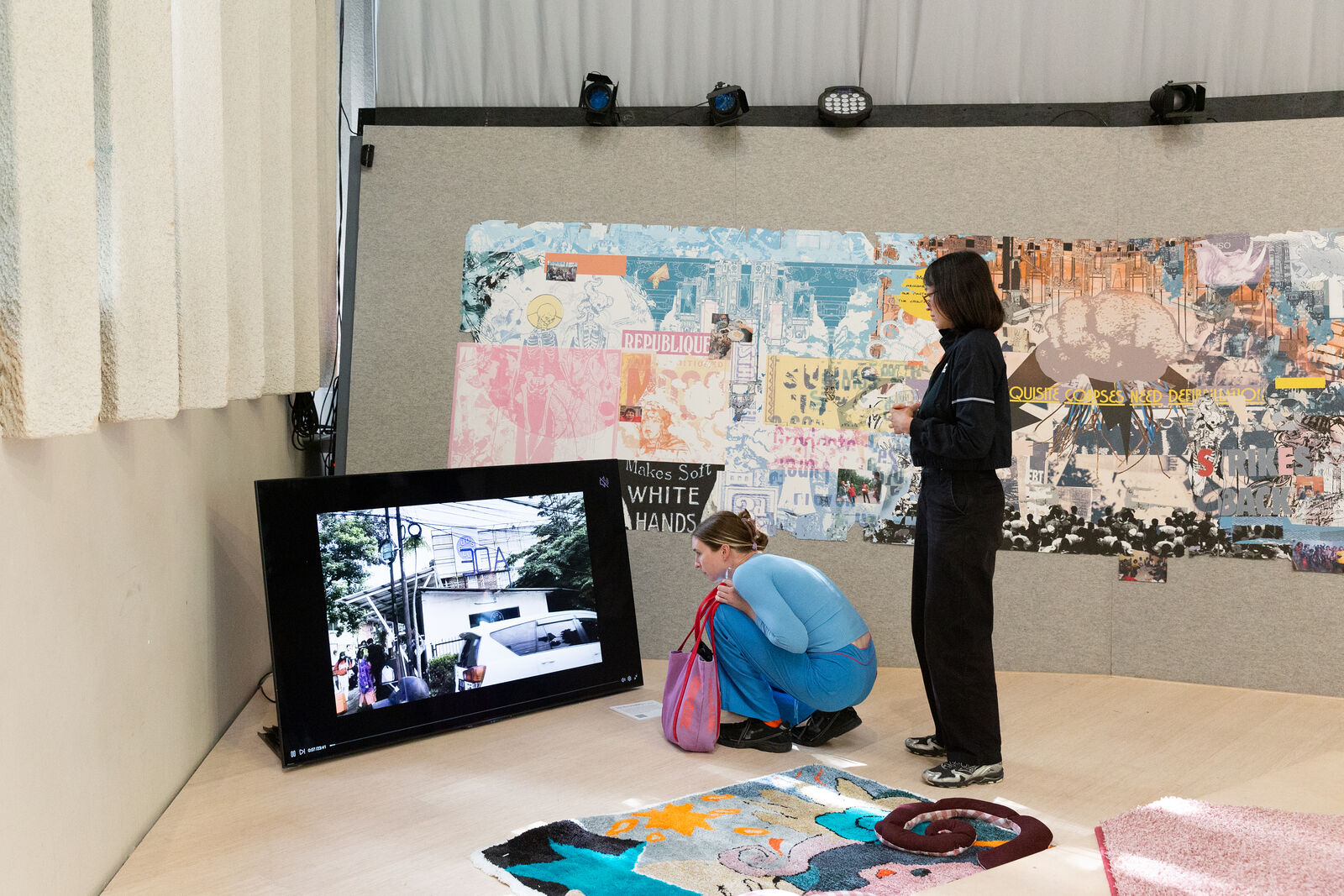
Documentation of the opening event of the group exhibition Building a House without Bricks, 2026, de Appel. Photo: Sophia Jiaqi Xu
If ‘building a house without bricks’ is ultimately a proposal for organising collective life, what aspects of this house would be impossible to build within the current art/social system and what aspects already exist outside it?
Gustavo A. Cruz Cerna (Biquini Wax): Responding to the proposition of Building a House Without Bricks as a proposal for organising collective life, we must first recognise that all human activity is inherently social—a fact that neoliberal capitalism has obscured by promoting the myth of the isolated individual.
In the 1990s, certain thinkers granted the museum, and by extension the broader art system, an almost ontological value, viewing its archival, time-suspending function as defining ‘life’ as everything that lies outside its conservation.
Following this logic, the ‘house without bricks’ cannot be built within the current art system. Any attempt to replicate a space free from dominant power structures, class, gender, race and coloniality, would merely produce an archived simulacrum, since the system itself is structurally embedded in those very relations. Conversely, what already exists outside it is the raw, unarchived, everyday collective vitality: the actual social practices that continuously organise life beyond institutional capture. An exercise like Building a House Without Bricks serves precisely to remind us of this: that the social is collective, and that we build neither houses nor societies alone.
All of you have been in Amsterdam for about two years now. How do you experience the city, thinking about spaces for living and being together? Was there anything that surprised you, pleasantly or negatively?
Mili Herrera (Biquini Wax): I think I agree with many of my friends about Amsterdam. The architecture, the urban planning, the roads—everything is so carefully designed that it can feel both calming and alienating at the same time.
I actually just arrived in Mexico and before that I spent a few weeks with friends in Marseille, and the contrast made me notice this even more. Amsterdam also made me wonder how it's possible to live without really talking to your neighbours or the people around you. It can feel like everyone has their own private world.
At the same time, it's a very open city. Even though the political climate has become more hostile in recent months, I still feel that, within the communities there, it's possible to have a certain degree of agency and to build something together.
One thing I found quite funny is that the city seems to be designed for couples. When it comes to housing, there are very few opportunities to live in larger shared houses with roommates. It feels as though the expected model is either to live alone or with your partner. For people interested in collective ways of living, that can be quite limiting, and it's becoming even more difficult now with the housing crisis. There are also things I miss from home, like graffiti. Despite everything, I do like the city.
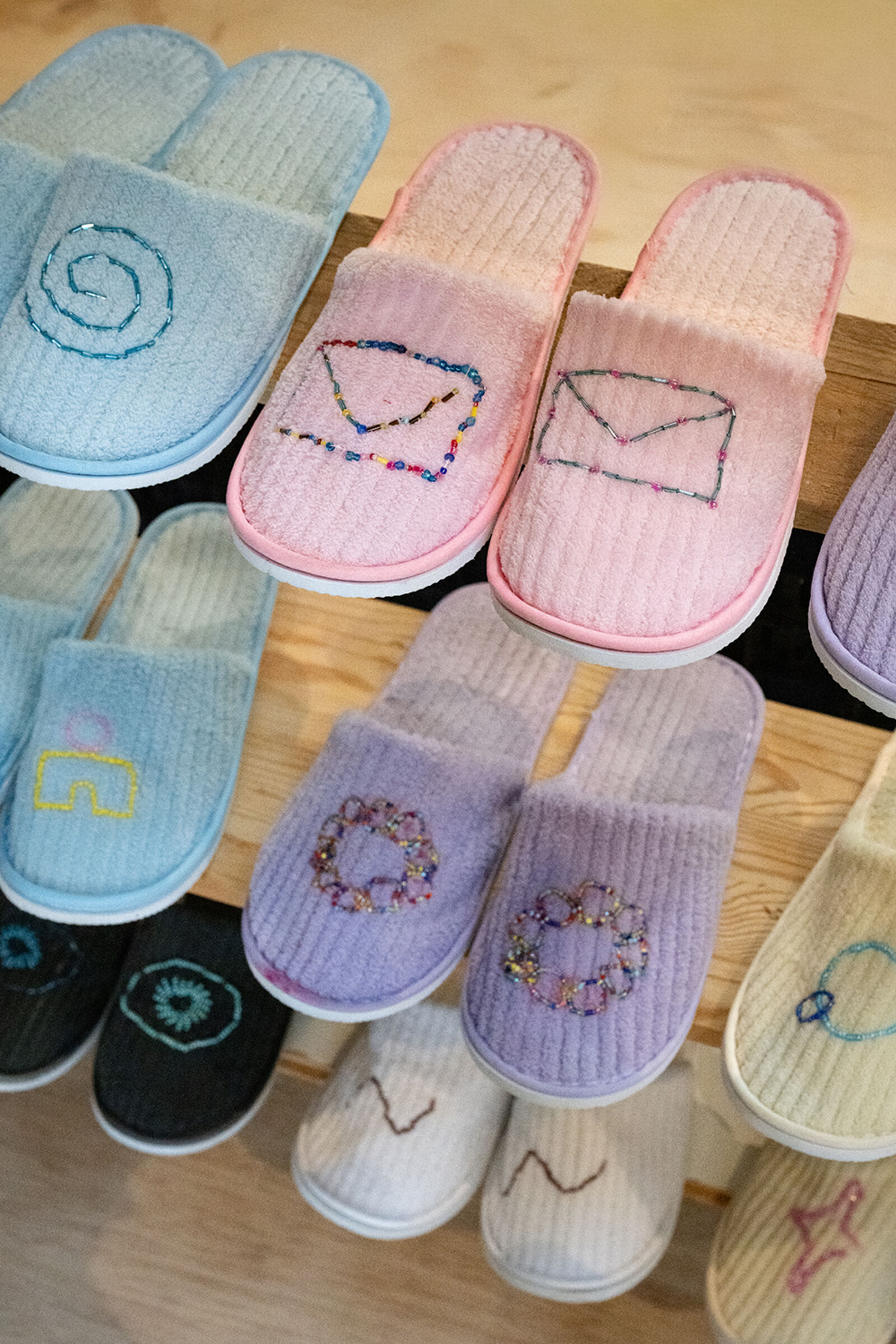
Documentation of the exhibition Building a House without Bricks, 2026, de Appel. Photo: Sander van Wettum
What is one thing you learned from and about collaborative practices over the last two years?
rori (Level Five): Collaborative practices are complex and messy; that’s what makes them more robust in time and more lasting in their relations than any other way of organising.
Mili Herrera (Biquini Wax): That is a difficult one. There's so much that I've learned and unlearned. I would probably say interculturality. I have also learned how important it is to envision the outcome through a certain way of organising ourselves. For larger groups like ours, finding ways to save time can be really important. I don't have many specific examples or tangible contributions or objects to point to. But one thing I have realised is that there are other ways of reaching consensus besides talking. There can be a kind of visual consensus, or forms of agreement that rely on other senses, not only on words, the brain, the mouth or the tongue. That becomes especially important because of language barriers, and because some people naturally need to speak more than others, while others need more space to be heard. I catch myself doing that too.
I also think it is important to recognise that a certain amount of rudeness, or directness, sometimes needs to be expressed as tender honesty if we want a collective to grow. We often try to be polite, but honesty can be interpreted either as an attack or as a gift. I think it's a gift.
I've also learned how beautiful mutual care can be, and how powerful other ways of accompanying one another are. Maybe that's the main point. I realised how similar collective cultures are, and even how similar their ambitions are. It is something shared by all living beings. We all want equity, we all want to work together, and we all want to create something that embraces interculturality. I really love that, because it made me realise that many of the divisions we experience, borders, visas, all these kinds of things, don't actually define what we are trying to do together. When we're practising the construction of something collectively, there's an incredible richness in that process. I think that's what I've learned the most.
Kate Mitchell (Khamoosh, RE-PEAT, Soundcamp): I had quite a romanticised idea of working collectively or collaboratively before. People are complex; everyone works, communicates and reacts very differently. It is tricky to make any blanket statement about collective work as it depends so much on the group and its dynamic. However, I would say one thing that I learned in the last two years during the Lumbung Practice temporary programme: to trust. Not just trusting the members in your collective and their dedication to the group, but trusting the process. Letting it unfold in a way that you could not have imagined with one mind. Starting when you start and trusting that whoever is there in the moment are the right people to make the decisions. And, while the exhibition is something we all care about, the process of working and being together is ultimately the thing that brought us together. Building this trust between each other, while challenging at times, has been very rewarding, and I am grateful and proud of this, as well as the exhibition that has come out of it.
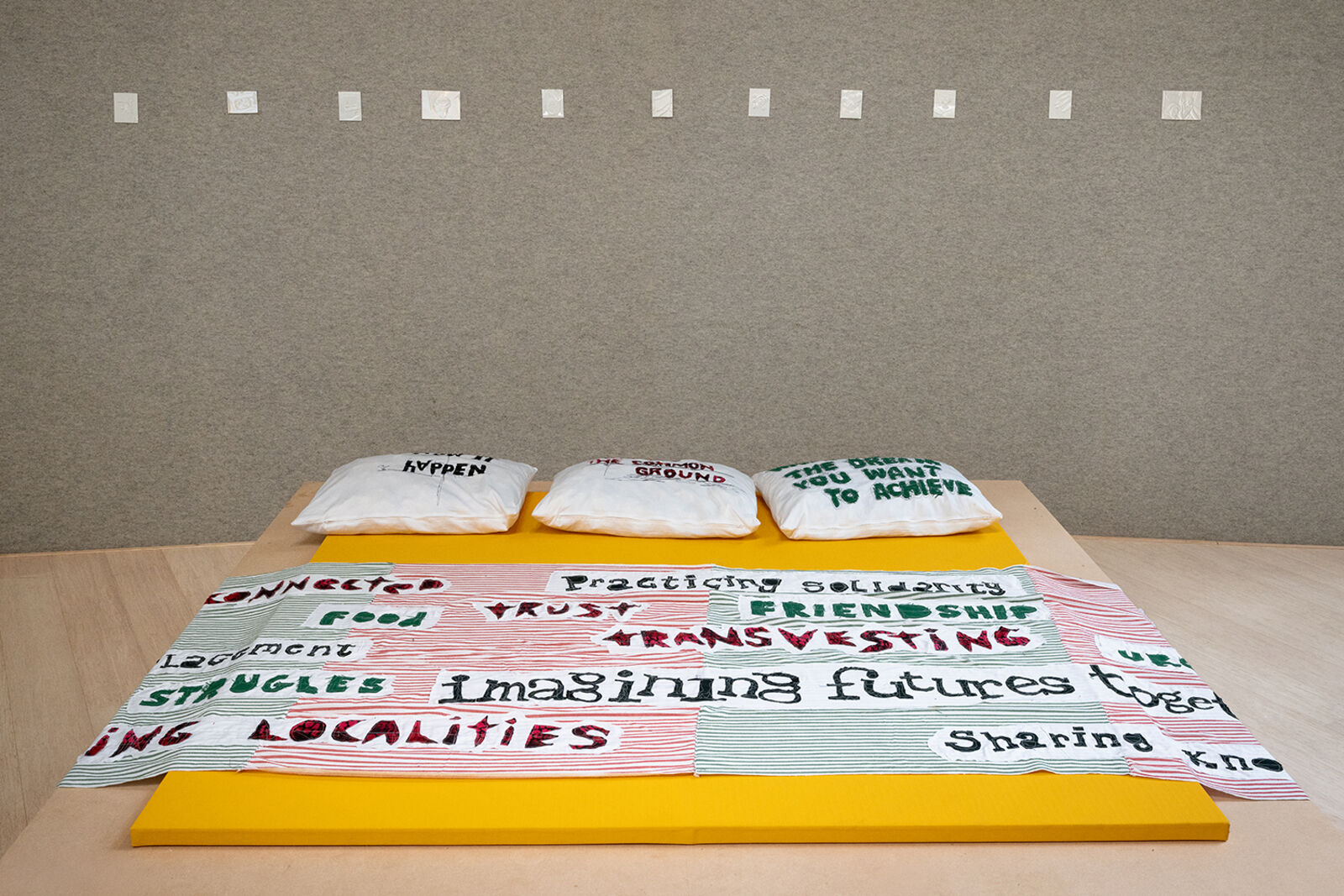
Documentation of the exhibition Building a House without Bricks, 2026, de Appel. Photo: Sander van Wettum
What’s next for damdam?
Chad Cordeiro (Danger Gevaar Ingozi Studio): damdam is currently finalising the process of finding a shared studio space, in order to continue the kinds of gatherings described above. The network of collectives will shift slightly as some of the active participants will leave Amsterdam, while others move to Amsterdam from different localities and become more active.
Juliette Douet (spin): We need some time to compost our two years together and find each other again with fresh energy.
Marianna Kruchinski (Typography): A reality check of what it actually means to build a house with the few bricks we've managed to salvage from institutions, while also carrying the pain, but also the tools of those experiences and facing the challenges of everyday life back in our local communities or in new ones. It wasn't easy to be damdam: a collective of collectives, trying to keep up with everything that was happening. But I think the real damdam is becoming something that goes beyond an educational programme just now.