de Appel Kiosk: Linzi's Party Supplies
10:00–17:00
Albert Cuypmarkt
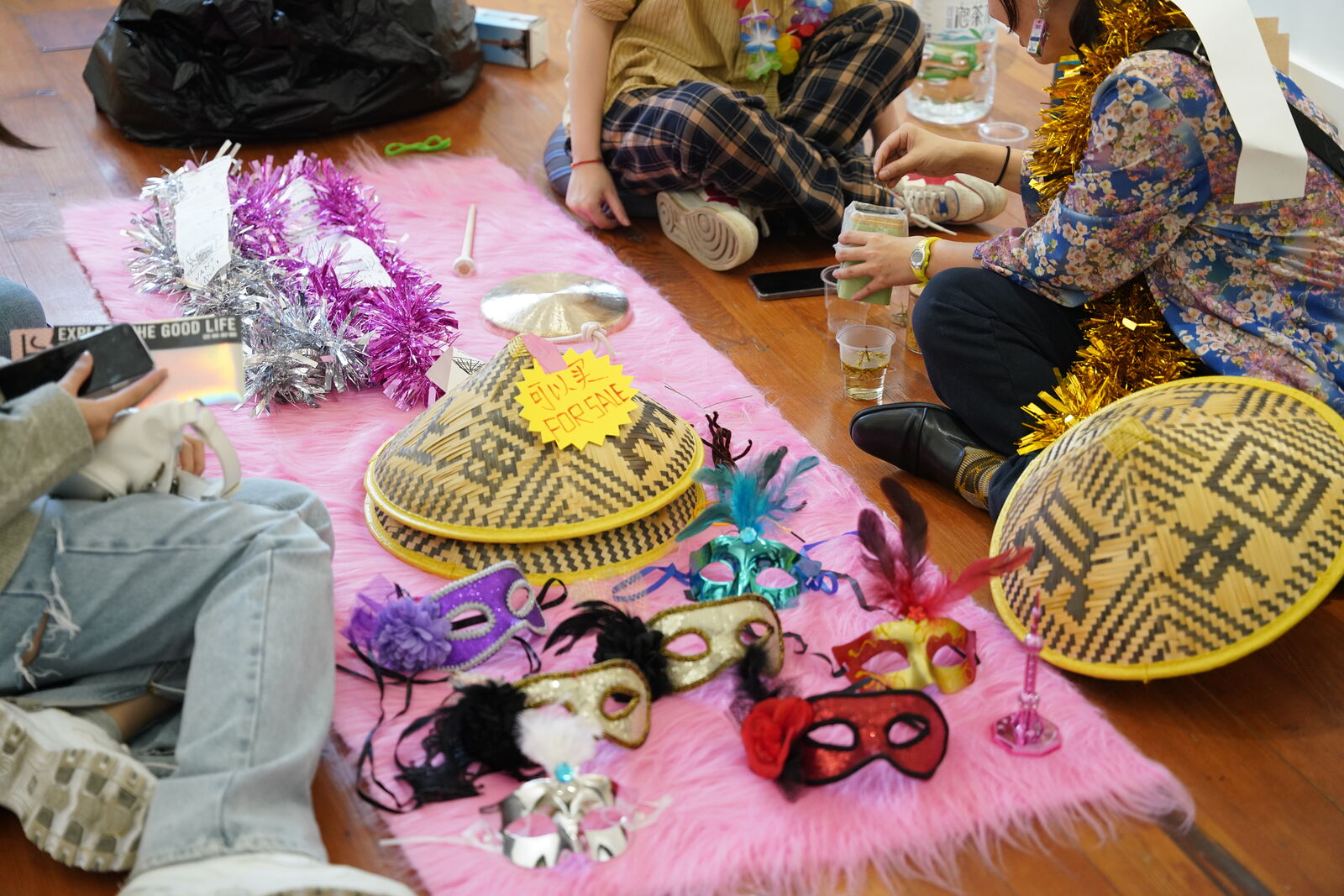
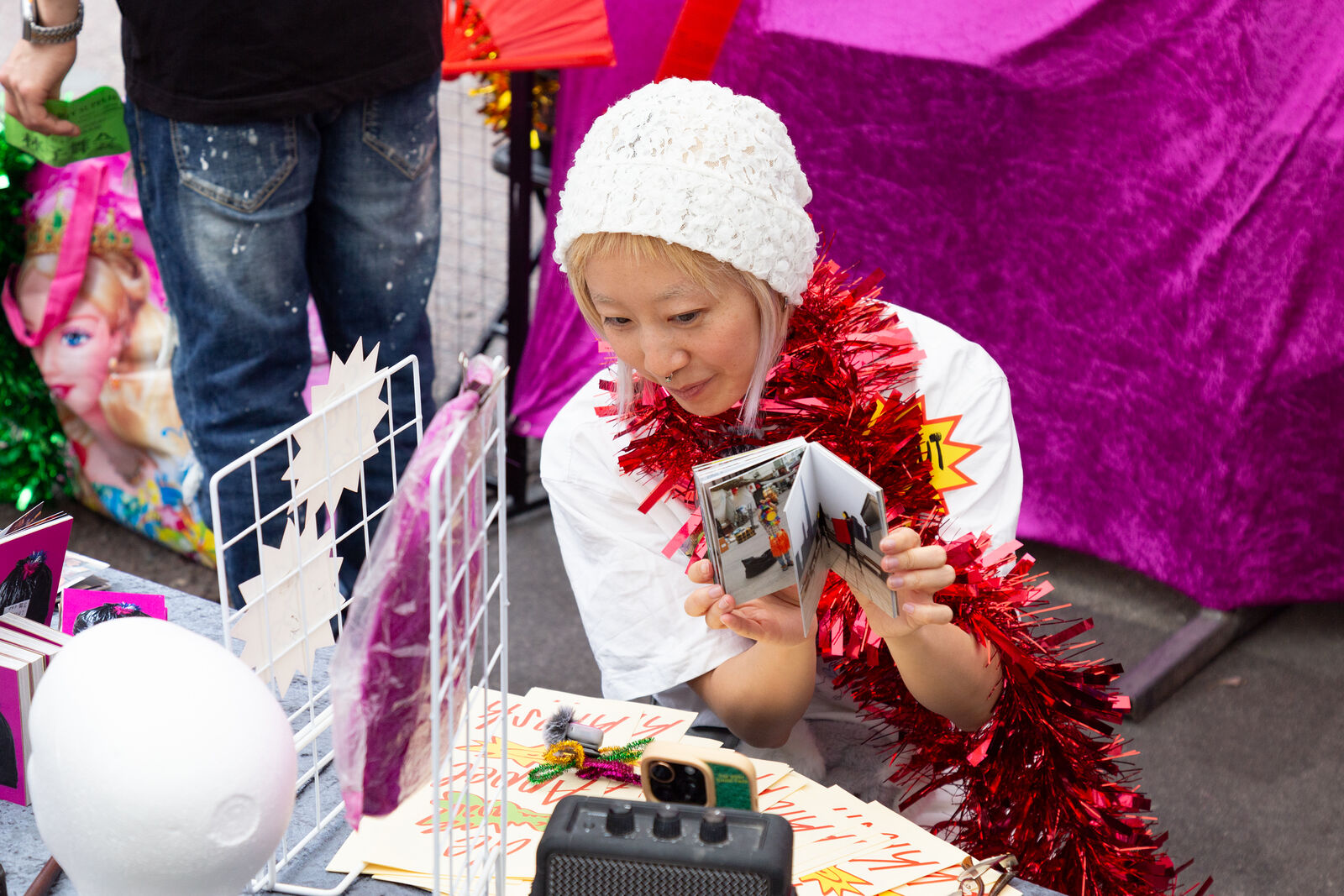
_ao_ao_ing ensemble, a performance collective based between Shanghai and Amsterdam, transplants a real Shanghai market stall onto Albert Cuypmarkt. They will run Linzi's Party Supplies: feather fans, paper lanterns, glittery tinsel, plastic dice, party props in fluorescent pink and electric blue; disposable and cheap goods of festivity and celebration.
The artists come from where these items are made, and the items come from the shop of Wu Fenglin (nicknamed Linzi), a party-supply vendor at Shanghai’s Chenghuangmiao Market. Like much of what fills European market stalls — often unbeknownst to buyers — her stock originates from Yiwu International Trade City in China, the world’s largest wholesale hub for small commodities. Linzi's Party is built around a real and ongoing relationship between the collective members and Linzi. They have been her customers for years, buying props for performances. During the 2022 Shanghai lockdown, when both party supplies and performance art were classified as “non-essential”, when both market stalls and theatre stages stood empty, the ensemble and Linzi began collaborating in the form of a livestream sale, a self-service shop in museum, a public auction, each time using the act of selling to hold open a space where economic exchange and mutual care have not yet separated.
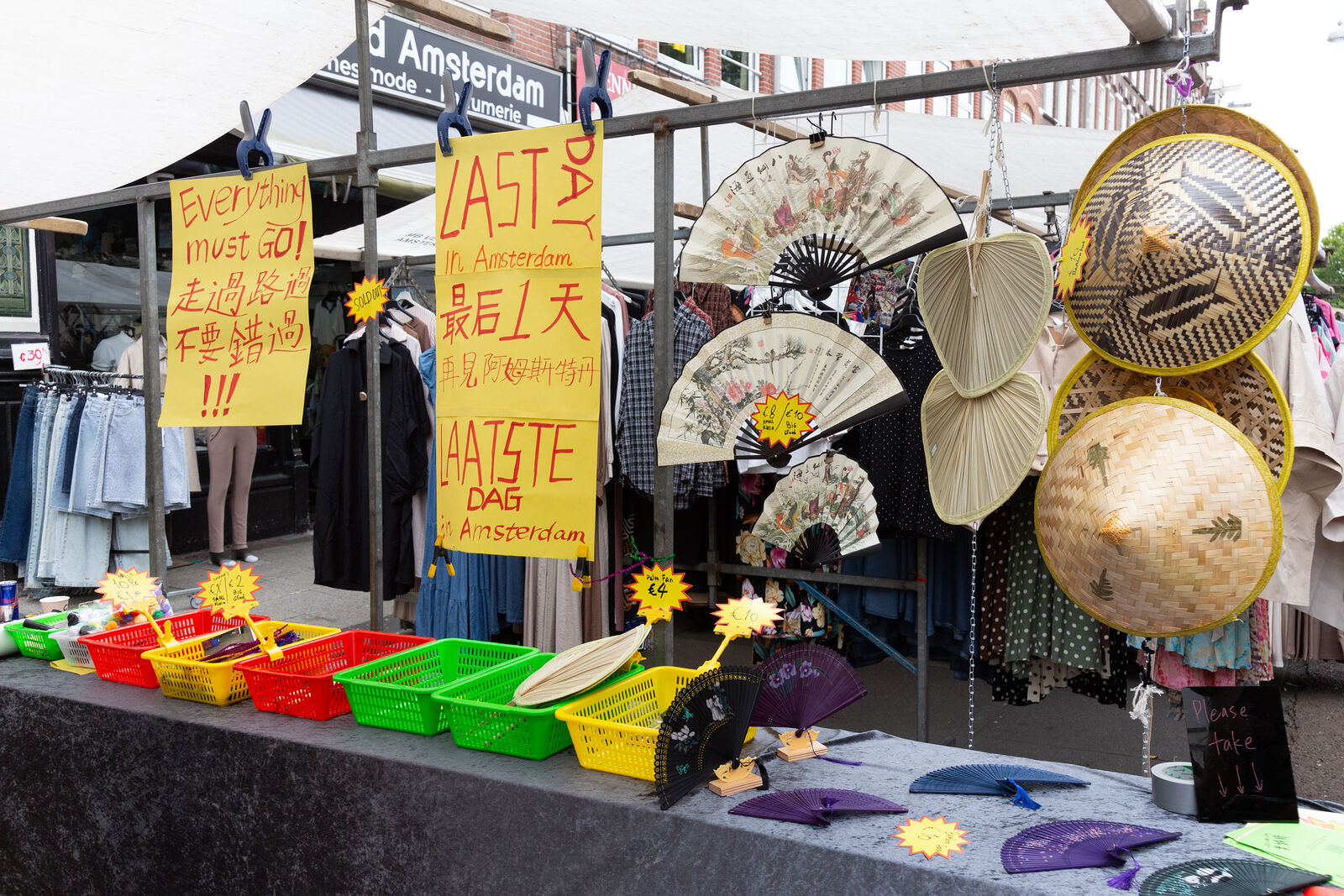
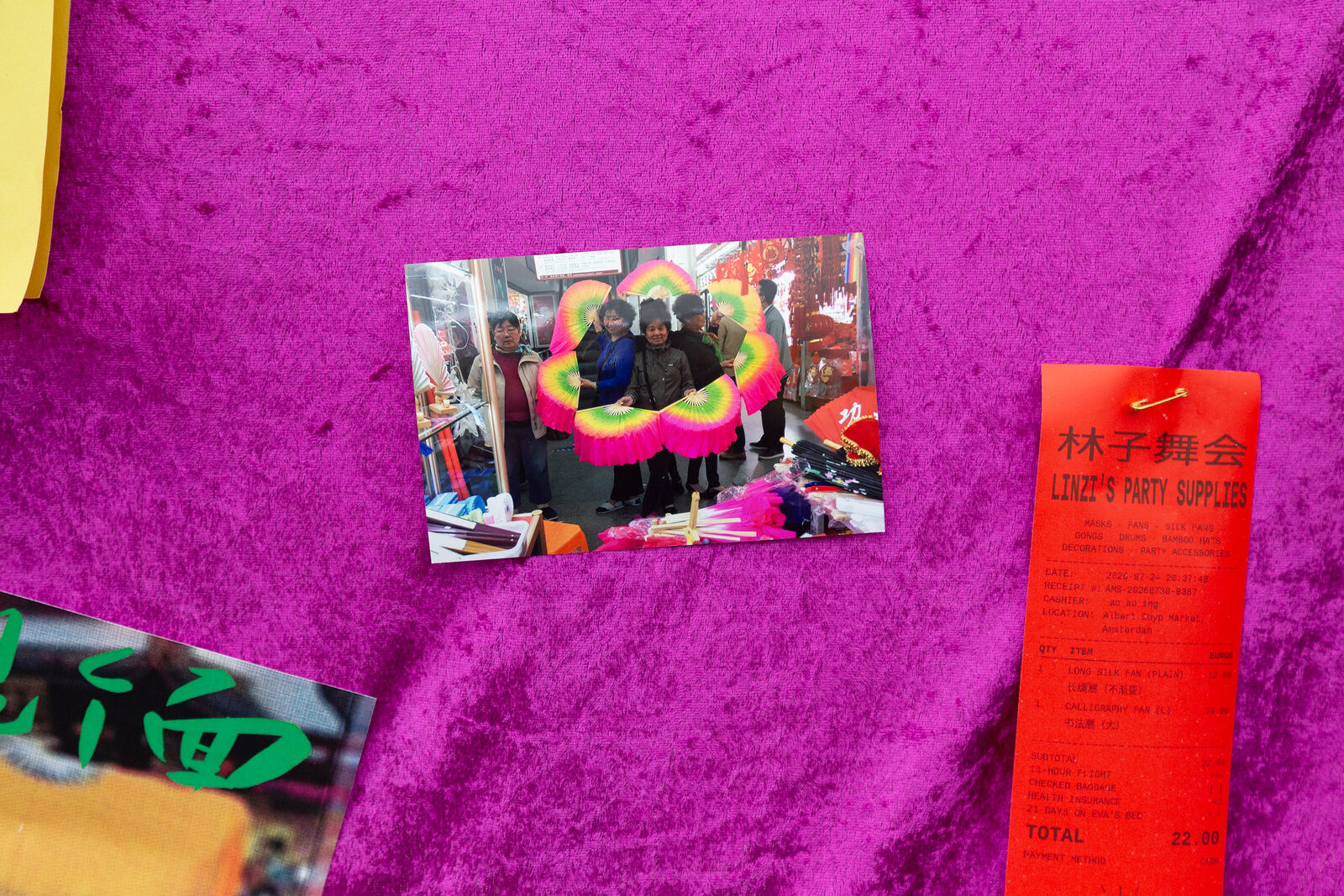
At Kiosk, the original wholesale price will be visible on the price tag alongside the European market price, tracing the gap and the journey in between. Linzi's photography, for her online listings, of her shop, her family posing as models, accompanies the commodities. The same cheap objects arrive, this time, carrying something they are not usually permitted to carry: a person's name, a relationship built over years, a face.
Dates and times
at Albert Cuypmarkt
○ Saturday 18 July, 10:00–17:00
○ Thursday 23 July, 10:00–17:00
○ Friday 24 July, 10:00–17:00
○ Thursday 30 July, 10:00–17:00
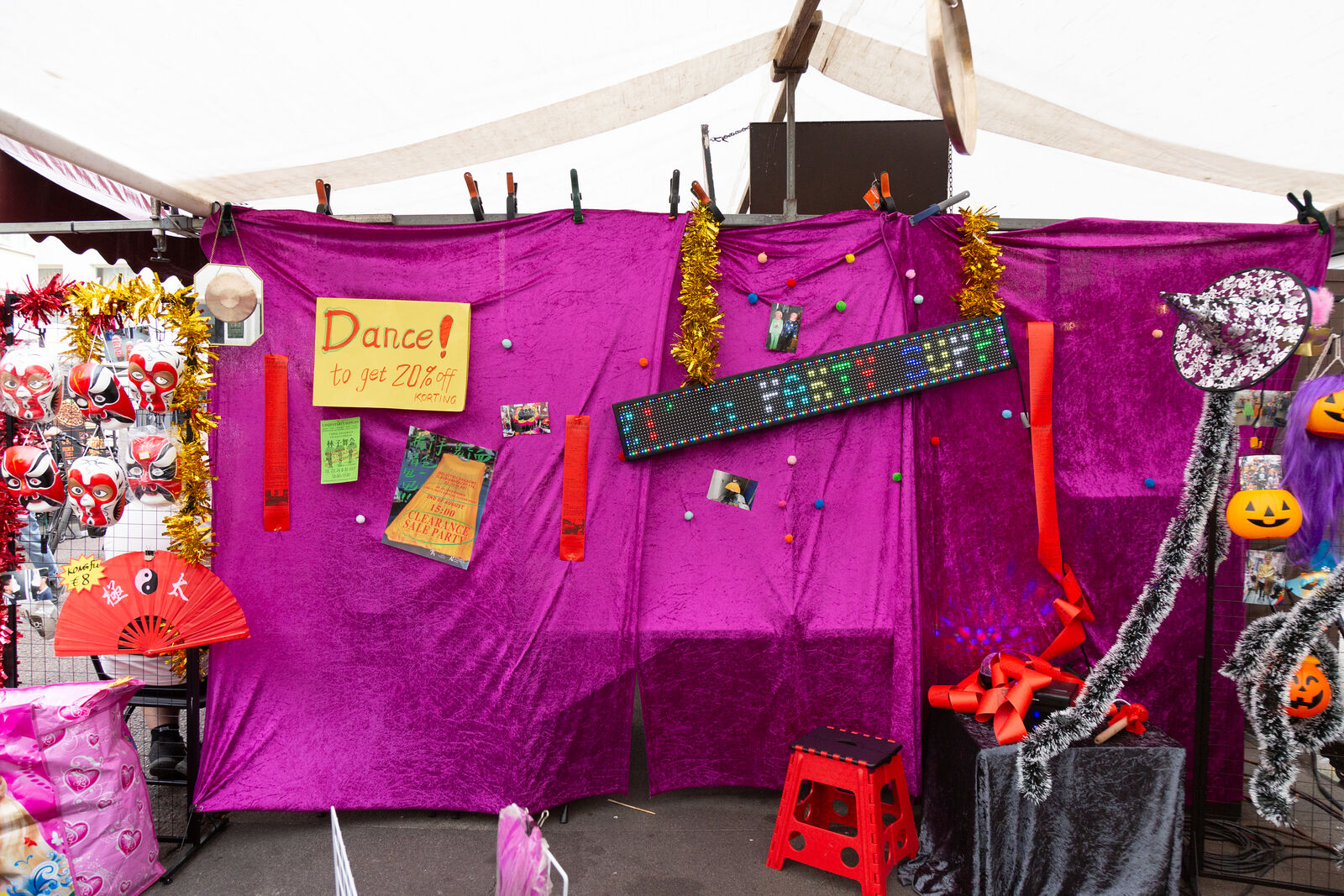
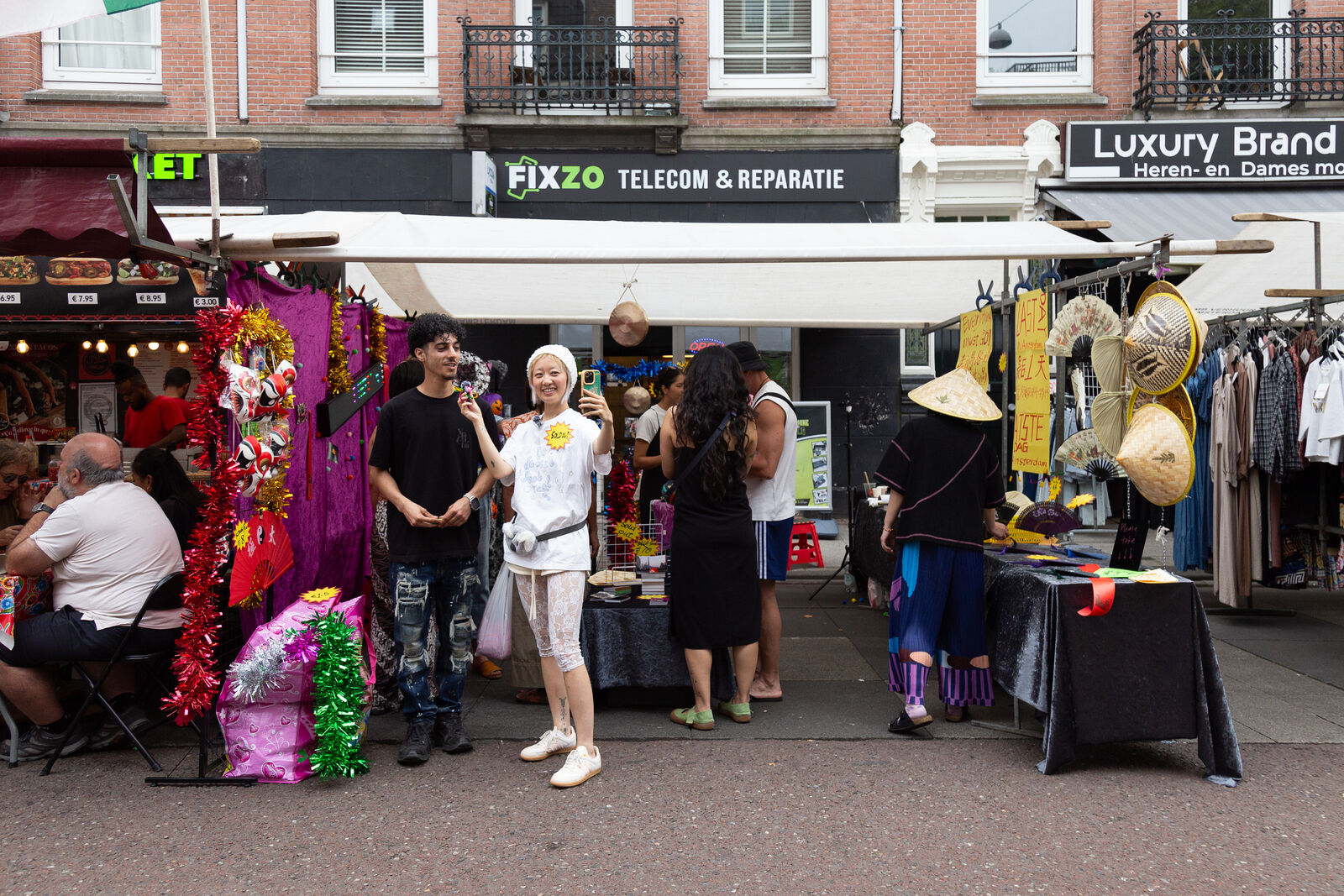
Photos: Sophia Jiaqi Xu
About de Appel Kiosk
We see urban markets as vibrant places where diverse cultures gather, becoming hubs for social interaction, community building, and cultural exchange. The street market is often based on small family or cooperative stalls and the forming of social solidarity between the stall owners. Part of the de Appel Kiosk’s endeavor is to reflect on practices of exchange and barter in market economies. de Appel wishes to engage in places other than art institutions to meet people through and with artistic practices without the overt distinction between art and society. The idea of the Kiosk was inspired by our friends in the lumbung and by other initiatives from artists to sustain their collectives and participate in a wider scope of economies.
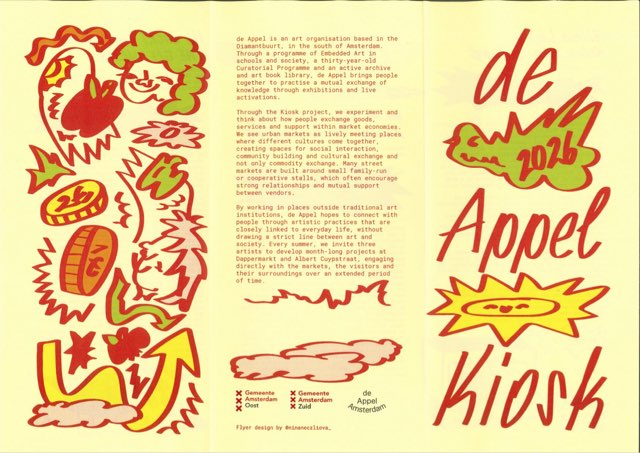
de appel kiosk 2026
archive, 2026